
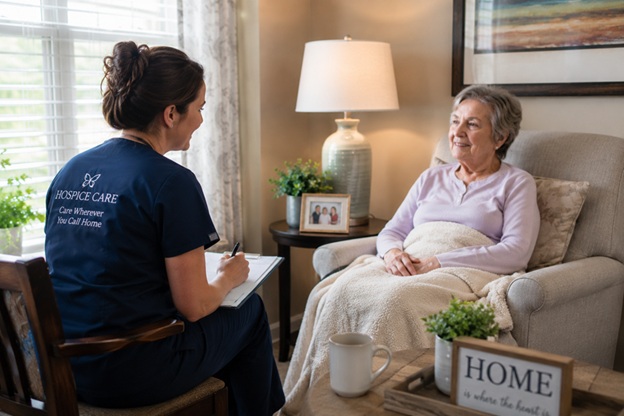
For families exploring hospice care in Tulsa, OK, the phrase “care wherever you call home” often sounds comforting, but many people are unsure what it actually means day-to-day. Hospice care is not limited to one setting. The goal is to provide support, comfort, and guidance directly where a patient feels safest and most at home.
That “home” may be a private residence, an assisted living community, a senior apartment, or even a family member’s house. What matters most is helping patients remain in an environment that supports dignity, emotional comfort, and meaningful connection.
Familiar Surroundings Often Reduce Stress During Serious Illness
One reason home-based hospice care matters so much is that familiar environments can ease emotional distress.
Patients living with serious illness often become more sensitive to changes in routine, noise, and unfamiliar surroundings. Hospitals and facilities may feel overwhelming after repeated medical visits or long stays away from home.
At home, patients are surrounded by things that bring comfort:
- Their own bed and personal belongings
- Familiar smells, sounds, and routines
- Pets and family members nearby
- Greater privacy and personal control
These details may seem small, but they can significantly affect emotional well-being.
Families often notice patients become calmer and more relaxed once they are back in a familiar environment.
Hospice Teams Adapt Care to the Realities of Daily Life
Hospice care inside the home is highly personalized because every living situation is different.
A patient living with a spouse in a quiet neighborhood may have very different needs than someone staying with adult children in a busy multigenerational household. Hospice teams learn how the home functions and adjust care accordingly.
Making movement safer inside the home
Nurses may recommend rearranging furniture, removing fall hazards, or introducing equipment that makes transfers and mobility easier.
Creating manageable caregiving routines
Families frequently feel overwhelmed trying to balance medications, meals, personal care, and sleep. Hospice teams help simplify routines, making caregiving more sustainable.
Reducing unnecessary hospital trips
One of the biggest goals of hospice care is helping families manage symptoms confidently at home whenever possible.
That support can prevent stressful emergency room visits that often create more discomfort for patients.
“Home” Can Mean More Than a House
Many families assume hospice only happens in a private home. In reality, hospice services can often follow patients into different living environments.
Patients may receive hospice support in:
- Assisted living communities
- Skilled nursing facilities
- Memory care residences
- Independent senior living apartments
- A relative’s home
This flexibility becomes especially important when family caregiving situations change unexpectedly.
For example, a spouse caregiver may become physically exhausted or unable to safely manage care on their own. Hospice teams can help families adjust while still prioritizing comfort and continuity.
Emotional Comfort Is Part of the Care Plan
Families often focus first on physical symptoms like pain or breathing difficulties. Emotional comfort is just as important.
Serious illness can create fear, frustration, loneliness, and uncertainty for both patients and caregivers. Being at home often allows people to maintain routines and relationships that help them feel emotionally grounded.
Hospice teams also help patients and families navigate the emotional challenges that often accompany end-of-life care at home.
Hospice teams also support emotional health by:
- Encouraging family conversations that are often delayed
- Helping patients express personal wishes
- Providing reassurance during difficult changes
- Supporting caregivers through stress and grief
These moments of guidance can ease tension inside the household and improve communication during emotionally difficult periods.
Caregiving at Home Is Not Always Easy, and Hospice Teams Recognize That
One misconception families have is that choosing home hospice means they must handle everything alone.
In reality, caregiving at home can become physically and emotionally demanding very quickly. Even devoted family caregivers often struggle with exhaustion, interrupted sleep, concerns about lifting, and constant worry.
Experienced hospice professionals understand these realities.
They regularly help families navigate situations such as:
- A spouse trying to provide care despite health problems of their own
- Adult children balancing caregiving with work and parenting
- Families disagreeing about care decisions
- Patients resisting help because they fear losing independence
These situations are common, and hospice teams are trained to support families without judgment.
Small Moments at Home Often Become the Most Meaningful
One reason many families choose home-based hospice care is the opportunity to preserve ordinary moments together.
Being at home allows patients to remain connected to daily life in ways hospitals often cannot.
That may mean:
- Sitting outside with family
- Watching grandchildren play
- Listening to favorite music
- Sharing meals
- Resting in a familiar room surrounded by memories
Families frequently remember these quiet moments long after the caregiving period ends.
Hospice care is not about controlling every outcome. It is about creating the best possible quality of life during a difficult season.
Why Early Hospice Support Often Creates Better Experiences
Many families wait until a crisis develops before exploring hospice services. Unfortunately, that delay can increase stress and limit the amount of support patients receive.
When hospice begins earlier, families usually have more time to:
- Build trust with the care team
- Learn what symptom changes to expect
- Create safer caregiving routines
- Address emotional concerns gradually
- Focus on comfort before exhaustion takes over
This often leads to a more peaceful experience for both patients and caregivers.
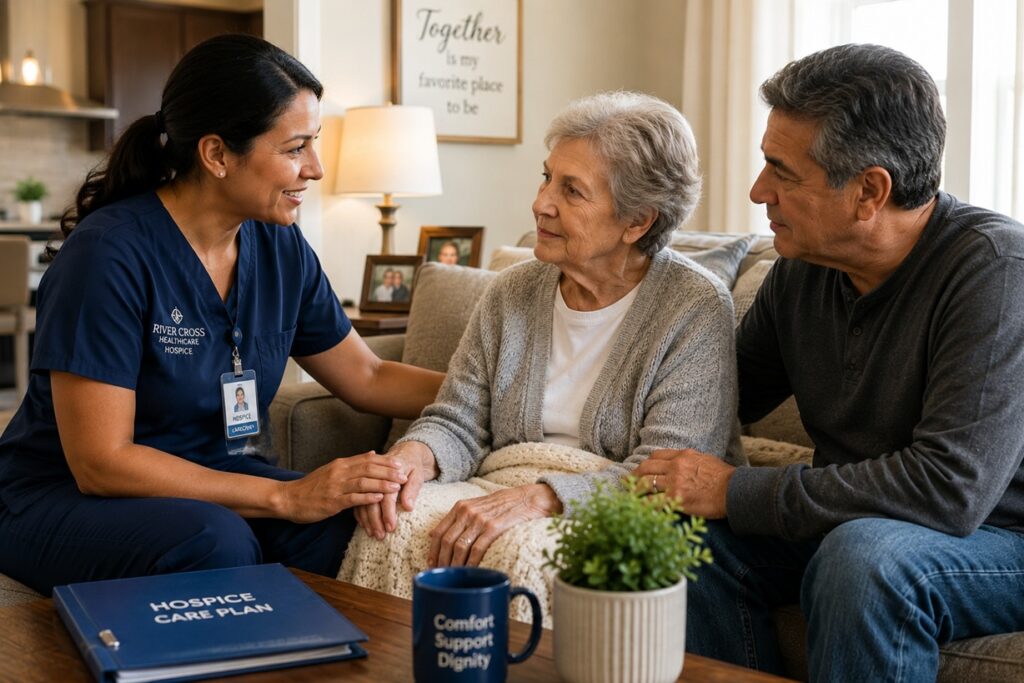
Compassionate Hospice Care Wherever You Call Home
The phrase “care wherever you call home” reflects something deeply personal. Hospice care is designed to support people in the environment where they feel most secure, respected, and connected to the people they love.
For families considering hospice care in Tulsa, OK, having compassionate support delivered directly to the home can ease uncertainty and reduce the burden of caregiving during serious illness. Rivercross Healthcare understands that comfort-focused care is about more than medical support. It is about helping families feel guided, heard, and supported through every stage of the journey.
If your family is beginning to notice increasing care needs, it may be time to learn more about available hospice support. You can also explore our home-based hospice support services to learn how compassionate care can meet patients wherever they call home. Call (877) 291-9690 today to learn how hospice care can provide comfort, guidance, and support wherever your loved one calls home.