
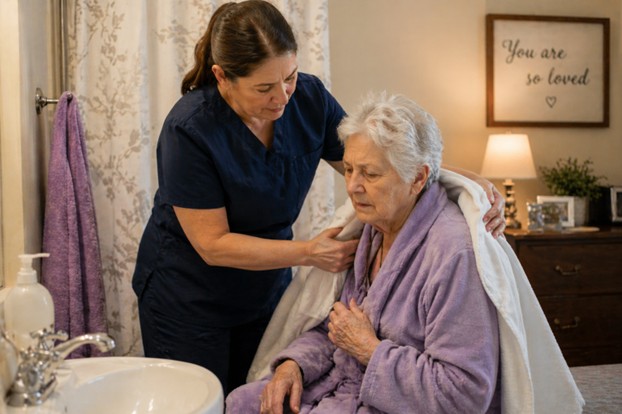
Families looking into hospice care in Wichita, KS, often focus on pain management first. What they don’t always expect is how quickly everyday tasks like bathing or getting dressed can become the hardest part of the day.
We’ve worked with families who were managing medications well but felt completely unprepared for personal care. Helping a loved one bathe or change clothes is deeply personal. It can bring up discomfort, resistance, and even embarrassment on both sides.
Hospice aides step into this space with experience and calm confidence, turning stressful routines into moments of care that feel safe and respectful.
Why Bathing and Dressing Are Often the First Breaking Point
Personal care is where many family caregivers start to feel overwhelmed. It’s not just physical effort. It’s the emotional weight of crossing once private boundaries.
We often see:
- Adult children unsure how to help a parent without causing embarrassment
- Spouses struggling with the physical strain of lifting or repositioning
- Loved ones resisting care because they feel exposed or vulnerable
When this happens, routines get skipped. Missed baths or clothing changes may seem small at first, but they can lead to skin issues, discomfort, and a decline in dignity.
Hospice aide support prevents that downward spiral early.
How Hospice Aides Provide Comfort Without Rushing the Process
One of the biggest differences families notice is the pace. Hospice aides don’t rush through tasks. They create a rhythm that matches the patient’s comfort level.
A typical visit may include:
- Gentle bed baths or assisted showers
- Dressing in comfortable, easy-to-wear clothing
- Grooming like brushing hair or shaving
- Skin care to prevent irritation or breakdown
What matters most is how it’s done. We’ve seen patients who initially refused help become more cooperative once they feel respected and unhurried.
That shift can turn daily care from a struggle into something much more manageable.
The Small Details That Improve Daily Comfort
Comfort is built through small, consistent actions that families may not think about right away.
Hospice aides often make small adjustments that improve comfort throughout the day. This may include choosing clothing that reduces friction or pressure points, keeping bedding dry and supportive, and helping reposition patients to prevent stiffness or soreness.
For example, something as simple as choosing softer fabrics or adjusting how a shirt is put on can reduce discomfort throughout the day.
These details add up. They directly affect how a person feels hour to hour, not just during care routines.
Managing Resistance and Preserving Dignity
It’s common for patients to resist help with personal care. This is rarely about stubbornness. It’s about control.
We’ve seen that resistance often comes from:
- Fear of losing independence
- Embarrassment about needing help
- Discomfort with unfamiliar routines
Hospice aides are trained to navigate this gently. They use clear communication, give choices when possible, and respect boundaries.
Instead of forcing care, they build trust. Over time, this reduces resistance and makes each visit smoother.

How Hospice Aides Support Family Caregivers Behind the Scenes
The benefit isn’t just for the patient. Families often experience immediate relief once aide support begins.
It means:
- Less physical strain from lifting or repositioning
- Fewer uncomfortable situations around personal care
- More time to focus on being present, not just caregiving
We’ve had families tell us the relationship with their loved one improved once they were no longer responsible for intimate care tasks. They could return to simply being a daughter, son, or spouse.
If daily care is starting to feel overwhelming, exploring hospice care support at home can help families better understand what level of assistance may bring the most comfort and relief.
What Happens When Personal Care Is Delayed Too Long
Delaying help with bathing and dressing often leads to avoidable complications.
We commonly see:
- Skin breakdown from moisture or pressure
- Increased discomfort that affects sleep and mood
- Greater resistance to care as routines become inconsistent
Once these issues develop, they require more intensive intervention. Starting earlier keeps care simple and prevents unnecessary discomfort.
For families unsure where to begin, exploring hospice care support at home can provide a clearer picture of what daily support may look like for both patients and families.
Bringing Ease and Dignity Back into Daily Life
Hospice aide support is not just about completing tasks. It’s about restoring a sense of normalcy and dignity in a time when so much feels uncertain.
At Rivercross Healthcare, we’ve seen how consistent, compassionate personal care changes the atmosphere in a home. There is less tension, more comfort, and a greater sense of calm for everyone involved.
If you’re starting to feel the strain of daily caregiving or noticing your loved one becoming resistant to help, it may be time to explore additional support. Many families begin this step by speaking with a hospice care team to find guidance that makes everyday life feel more manageable and supported. The right support can ease both the physical and emotional weight of care, one day at a time. Call (877) 291-9690 today to learn how compassionate hospice care can help support your family at home.